
Machine-Made vs Hand-Knotted: What You Need to Know
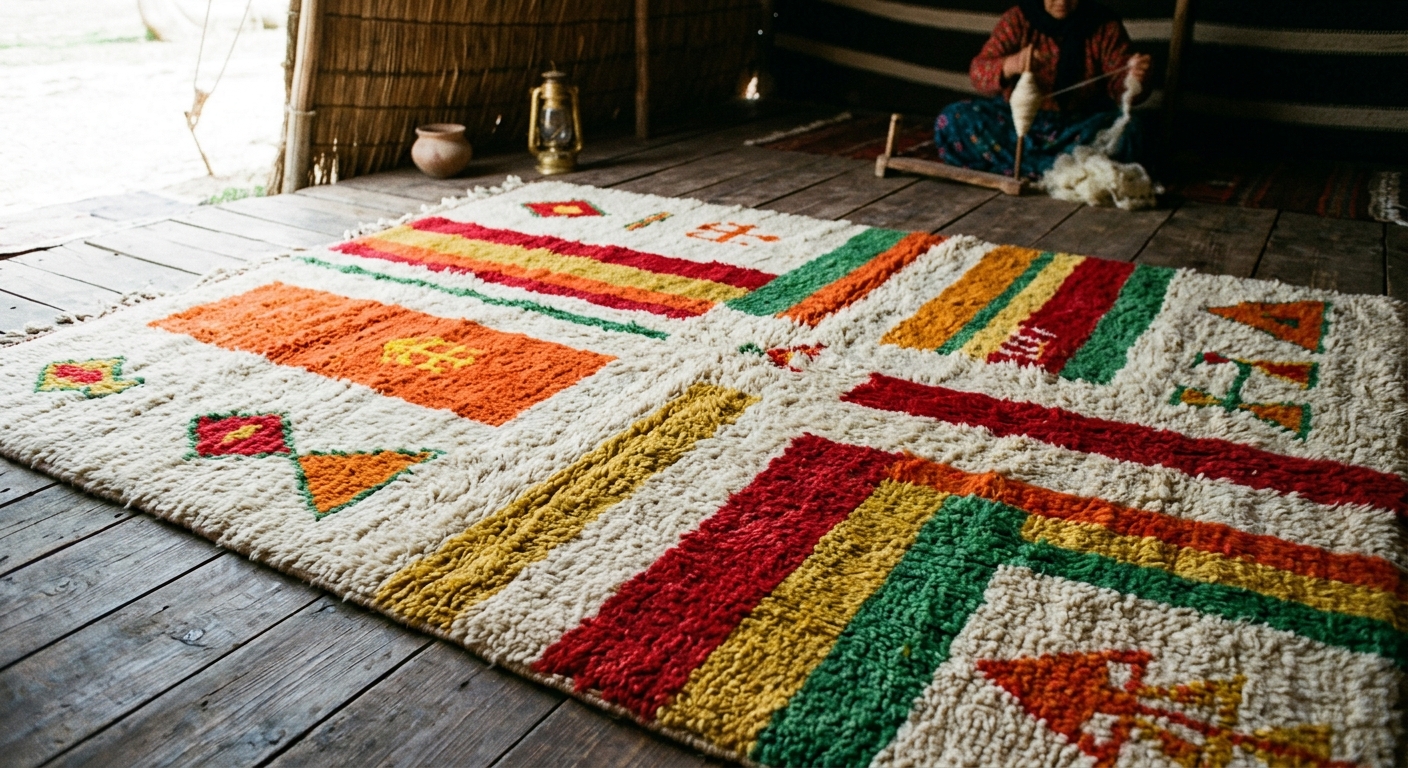
One of the most common questions we hear from customers is whether they should invest in a hand-knotted Persian carpet or choose a more affordable machine-made alternative. It is a fair question, and the honest answer is: it depends on your priorities, your budget, and the role the carpet will play in your home.
This article provides a straightforward comparison to help you make an informed decision.
How They Are Made
**Hand-knotted carpets** are created entirely by human hands on a loom. Each knot is tied individually, one at a time, by a weaver working from a design template (or from memory, in the case of tribal weavers). A single carpet may contain hundreds of thousands — or even millions — of individual knots. The process is extraordinarily labor-intensive: a large, fine carpet can take one to three years to complete, with multiple weavers working side by side.
**Machine-made carpets** are produced on power looms that can generate a finished carpet in hours rather than months. Modern computer-controlled looms can replicate complex patterns with precision, using pre-programmed design files. The fibers (typically polypropylene, polyester, acrylic, or machine-spun wool) are woven or tufted at high speed.
This fundamental difference in production — thousands of hours of human craftsmanship versus hours of automated manufacturing — drives most of the other differences between the two.
Quality and Detail
Hand-knotted carpets achieve a level of detail and nuance that machines cannot fully replicate. Because each knot is individually placed, weavers can introduce subtle color variations (called "abrash") that give the carpet depth and vitality. The slight irregularities inherent in handwork — tiny variations in knot tension, color gradation, and pattern alignment — create a visual warmth and character that distinguishes handmade work.
Machine-made carpets can produce sharp, clean patterns, and modern looms have become remarkably capable. However, the designs tend to look flat and uniform compared to handmade work. The absence of abrash and the mechanical regularity of the weave create a carpet that, while attractive, lacks the organic quality that makes handmade carpets so appealing.
At higher qualities, the difference is unmistakable even to untrained eyes. Place a fine hand-knotted Tabriz carpet next to its machine-made imitation, and the handmade piece will have a depth, luster, and presence that the machine version simply cannot achieve.
Durability
This is one area where hand-knotted carpets have a decisive advantage. A well-made hand-knotted wool carpet can last 50 to 100 years or more with proper care. Many antique Persian carpets are still in excellent condition after 150 years of use. The hand-tied knots are individually secured, and the natural wool fibers are inherently resilient.
Machine-made carpets using synthetic fibers typically last 5 to 15 years, depending on the quality and the level of foot traffic. The fibers are less durable, the weave structure is less robust, and they tend to flatten, fade, and show wear patterns much sooner.
Machine-made carpets using wool are more durable than synthetic alternatives, but they still do not match the longevity of hand-knotted construction. The machine weave tends to loosen over time in ways that hand-knotted construction does not.
When you calculate cost-per-year of ownership, a hand-knotted carpet costing ten times more than a machine-made one may actually be the better value if it lasts ten to twenty times longer.
Feel and Texture
The feel of a carpet underfoot is an important part of the experience, and the differences here are significant.
Hand-knotted wool carpets have a dense, springy feel. The natural wool fibers compress and recover under foot traffic, maintaining their structure year after year. They are warm in winter and surprisingly cool in summer. The texture is rich and satisfying.
Machine-made synthetic carpets can feel soft when new — sometimes deceptively so, as manufacturers use chemical treatments to enhance initial softness. However, this softness often diminishes with use, and the carpet can develop a flat, matted quality over time.
Machine-made wool carpets feel better than synthetic alternatives but still tend toward a thinner, less substantial hand than their handmade counterparts.
Design and Authenticity
Hand-knotted Persian carpets carry authentic cultural heritage. The designs are rooted in centuries of tradition, refined by master weavers across generations. Each carpet is unique — even carpets woven from the same template will differ slightly due to the human element in their creation.
Machine-made carpets reproduce Persian designs as surface patterns, but they do not carry the same cultural authenticity. They are copies of an aesthetic rather than products of the tradition itself. For some buyers, this distinction matters deeply; for others, it is less important.
It is worth noting that some machine-made carpets are marketed with intentionally misleading labels. Terms like "Persian-style," "handmade look," or "traditional" do not mean the carpet was made in Iran or by hand. Always ask specific questions about origin, material, and production method.
Environmental Considerations
Hand-knotted carpets are inherently more sustainable. They use natural materials (wool, cotton, silk), require no powered machinery in their creation, and last for generations — reducing the cycle of consumption and disposal.
Machine-made synthetic carpets are derived from petroleum-based materials, require significant energy to produce, and end up in landfills within a decade or two. Even machine-made wool carpets have a larger environmental footprint than handmade equivalents due to manufacturing energy costs.
If environmental sustainability is important to you, hand-knotted natural-fiber carpets are the clear choice.
Price
Here is where machine-made carpets have their obvious advantage. A machine-made carpet can cost anywhere from 50 to 500 euros, depending on size and quality. A comparable hand-knotted carpet might range from 500 to 5,000 euros or more.
At the highest quality levels, hand-knotted carpets can reach tens of thousands of euros — prices that reflect months or years of skilled labor, premium materials, and genuine artistry.
For buyers with limited budgets, machine-made carpets provide an affordable way to cover floors attractively. There is no shame in choosing a machine-made carpet when finances dictate it.
However, if you can afford a hand-knotted carpet — even a small one — we believe the investment is worthwhile. A single high-quality handmade carpet in a key location (the living room, the entrance hall) will bring more beauty and satisfaction than several machine-made alternatives.
When to Choose Machine-Made
Machine-made carpets make sense in certain specific situations:
**Temporary spaces.** If you are renting or expect to move soon, a machine-made carpet can fill the gap without a major investment.
**High-risk areas.** A kitchen, a child's playroom, or a covered outdoor area might benefit from an affordable, replaceable carpet rather than a valuable handmade one.
**Budget constraints.** If a handmade carpet is genuinely beyond your current means, a machine-made carpet is a valid alternative. You can always upgrade later.
**Supplementary pieces.** Some buyers use machine-made carpets in secondary rooms while reserving their handmade pieces for the main living spaces.
When to Choose Hand-Knotted
Hand-knotted carpets are the better choice when:
**You want lasting quality.** If you are furnishing a home you plan to live in for many years, a handmade carpet will outlast any machine-made alternative many times over.
**Aesthetics matter.** If you care about the depth, warmth, and character of your interior, a handmade carpet delivers a quality of beauty that machine-made carpets cannot match.
**You value craftsmanship.** If supporting traditional artisans and preserving cultural heritage resonates with you, buying handmade is a tangible way to contribute.
**Investment potential.** Quality handmade Persian carpets hold their value and can appreciate over time. Machine-made carpets depreciate immediately.
The Bottom Line
We believe in honesty: machine-made carpets serve a purpose, and there is no point in pretending otherwise. But they are a different category of product from hand-knotted Persian carpets.
A machine-made carpet is a floor covering. A hand-knotted Persian carpet is a work of art. Both have their place, and both can bring beauty to a home. The question is which one is right for you, right now.
At Carpet Maison, our collection focuses on authentic hand-knotted and high-quality carpets, because we believe in offering products with genuine lasting value. We are happy to help you find the right carpet for your space and budget — whether that means a statement piece for your living room or a practical solution for everyday use.