
How to Choose the Perfect Persian Carpet for Your Home
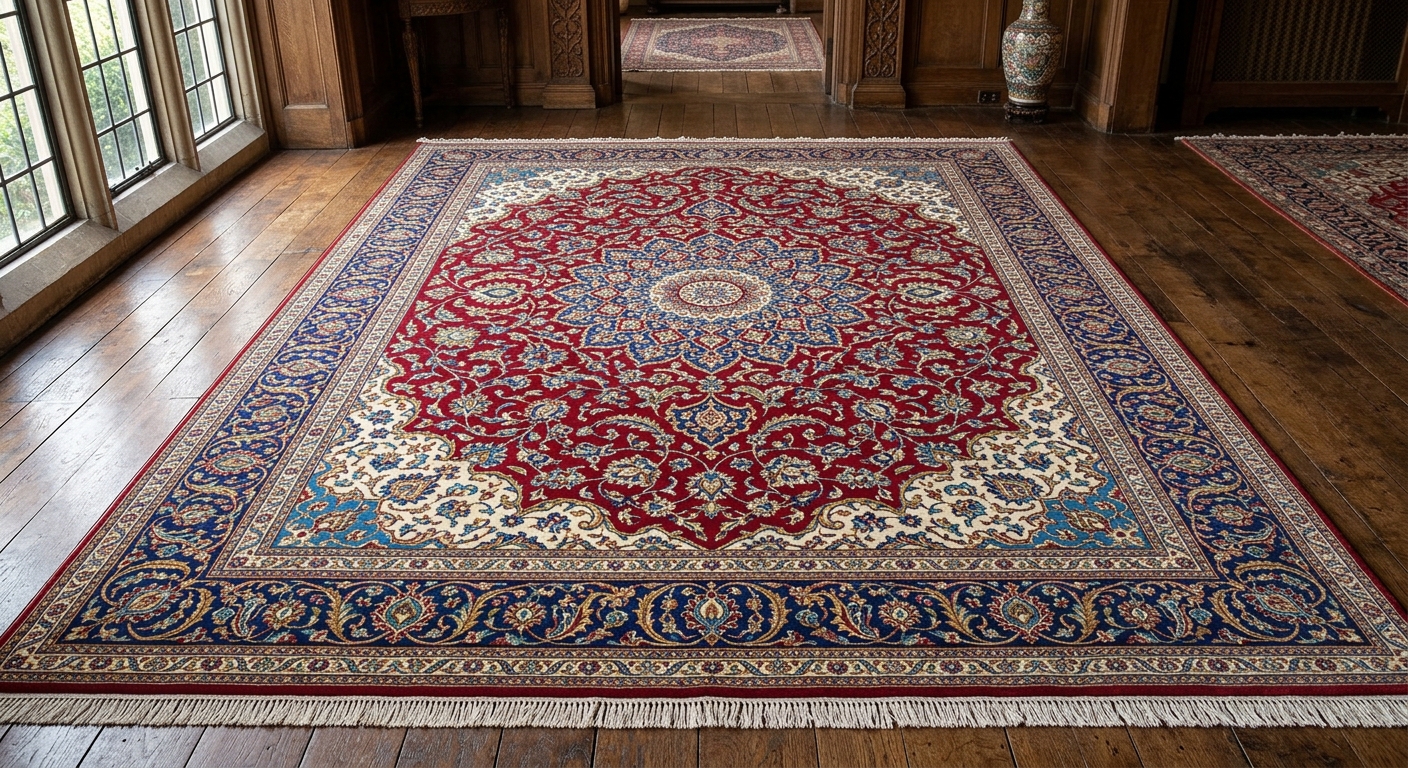
A Persian carpet is more than a floor covering — it is a work of art, a piece of cultural heritage, and often a family heirloom passed down through generations. Whether you are furnishing your first apartment or adding character to an established home, choosing the right Persian carpet can transform an entire room. But with so many options in terms of size, material, pattern, and origin, the process can feel overwhelming for first-time buyers.
This guide is designed to simplify that journey. We will walk you through the key considerations so you can make a confident, informed decision.
Start with the Room
Before you fall in love with a particular design, take a step back and think about the space you are furnishing. The room dictates many of your choices — from the carpet's size to its material and color palette.
Living rooms typically call for larger carpets that anchor the seating area. A common approach is to choose a carpet large enough that at least the front legs of your sofa and chairs rest on it. This creates visual cohesion and makes the room feel pulled together. For a standard living room, sizes between 200x300 cm and 300x400 cm work well.
Dining rooms require a carpet that extends at least 60 cm beyond the table on all sides, so chairs can be pulled in and out without catching on the edge. Bedrooms benefit from a carpet placed under the lower two-thirds of the bed, extending out on the sides where your feet touch the floor each morning.
Hallways and entryways are perfect for runners — long, narrow carpets that add warmth and protect high-traffic flooring.
Choosing the Right Size
Measure your room carefully before shopping. A carpet that is too small for a space will look lost and disconnected. One that is too large may overwhelm the room or bunch up against furniture.
As a general rule, leave 30 to 50 cm of bare floor visible around the edges of the carpet. This frames the carpet and lets it breathe within the room. For open-plan spaces, you can use multiple carpets to define separate zones — a dining area carpet, a living area carpet, and perhaps a runner connecting the two.
At Carpet Maison, every product listing includes precise dimensions, so you can filter by size to find carpets that fit your space exactly.
Color and Pattern Matching
Persian carpets come in an extraordinary range of color palettes, from deep reds and navy blues to soft creams, sage greens, and modern grey tones. The key is to work with your existing interior rather than against it.
If your room has neutral walls and furniture, a richly colored carpet — perhaps a traditional Tabriz with its deep reds and intricate medallion patterns — can serve as a stunning focal point. Conversely, if your space already has bold colors or busy patterns, consider a more subdued carpet. Gabbeh carpets, with their minimalist geometric designs and warm earth tones, blend beautifully into modern and Scandinavian-inspired interiors.
Look at the undertones of your existing furniture and wall colors. Warm-toned rooms (beige, cream, terracotta) pair naturally with carpets that feature warm reds, golds, and burnt oranges. Cool-toned rooms (grey, blue, white) harmonize with carpets in navy, teal, ivory, and silver.
Do not be afraid to bring a fabric swatch or a photo of your room when evaluating options. Many of our customers find it helpful to compare carpet images against their interiors before making a decision.
Material Selection
The material of your carpet affects its look, feel, durability, and price. Here is a quick overview:
**Wool** is the most popular choice for Persian carpets. It is durable, naturally stain-resistant, and develops a beautiful patina over time. Wool carpets are excellent for high-traffic areas like living rooms and hallways. They offer a warm, substantial feel underfoot and hold dyes exceptionally well, producing rich, lasting colors.
**Silk** produces the most luxurious carpets, with an unmistakable sheen and incredibly fine detail. Silk allows weavers to achieve much higher knot densities, resulting in intricate designs that are almost painting-like in their precision. Ghom (Qom) silk carpets are legendary for this quality. However, silk is more delicate and best suited for low-traffic areas or wall display.
**Wool-silk blends** offer a practical middle ground. The wool provides durability and body, while silk highlights add a subtle luster to key design elements.
**Viscose and machine-made alternatives** are the most affordable option. While they cannot match the character and longevity of handmade wool or silk, they offer an accessible entry point for those on a tighter budget.
Understanding Carpet Origins
Different weaving regions produce distinctly different styles. Learning the basics helps you narrow your search:
**Tabriz** carpets are known for their detailed, classical designs — often featuring central medallions, elaborate borders, and a refined color palette. They are among the most prestigious Persian carpets.
**Kashan** carpets share a similar classical elegance but tend toward richer reds and blues, with floral motifs and curvilinear designs.
**Gabbeh** carpets come from the nomadic tribes of southern Iran. They feature bold, simple geometric patterns and a thicker, more rustic pile. They are the go-to choice for contemporary interiors.
**Isfahan** carpets are celebrated for their extraordinary craftsmanship, often using silk on a silk foundation with some of the highest knot counts in the world.
Exploring these regional styles is one of the joys of shopping for a Persian carpet. At Carpet Maison, we organize our collection by origin, making it easy to browse and compare.
Budget Considerations
Persian carpets span a wide price range. A small machine-made piece might cost a few hundred euros, while a large, fine handmade silk carpet can reach into the tens of thousands.
Set a realistic budget before you start, but also consider that a quality handmade carpet is a long-term investment. A well-maintained wool carpet can last 50 to 100 years, making the cost-per-year remarkably low. Unlike mass-produced furnishings, handmade Persian carpets often appreciate in value over time.
If your budget is limited, consider starting with a smaller size or choosing a region known for excellent value — Gabbeh and tribal carpets, for example, offer authentic handmade craftsmanship at more accessible price points.
Practical Tips for Your Purchase
Always request high-quality photographs that show the carpet from multiple angles and in natural light. Pay attention to knot density (measured in knots per square centimeter), as this is one indicator of quality and detail.
Consider the carpet's pile height. Low-pile carpets are easier to maintain and work well under dining tables, while higher-pile carpets feel more luxurious underfoot in bedrooms and lounges.
Finally, trust your instincts. A Persian carpet should speak to you. The best choice is the one that makes you smile every time you walk into the room.
Making Your Decision
Choosing a Persian carpet is a personal journey. Take your time, explore different styles and origins, and do not rush the decision. The right carpet will complement your home, reflect your personality, and bring warmth and artistry to your daily life for decades to come.
Browse the full Carpet Maison collection to discover carpets across every style, size, and price range — each one carefully selected and photographed to help you find your perfect match.