
Caring for Your Persian Carpet: A Complete Maintenance Guide
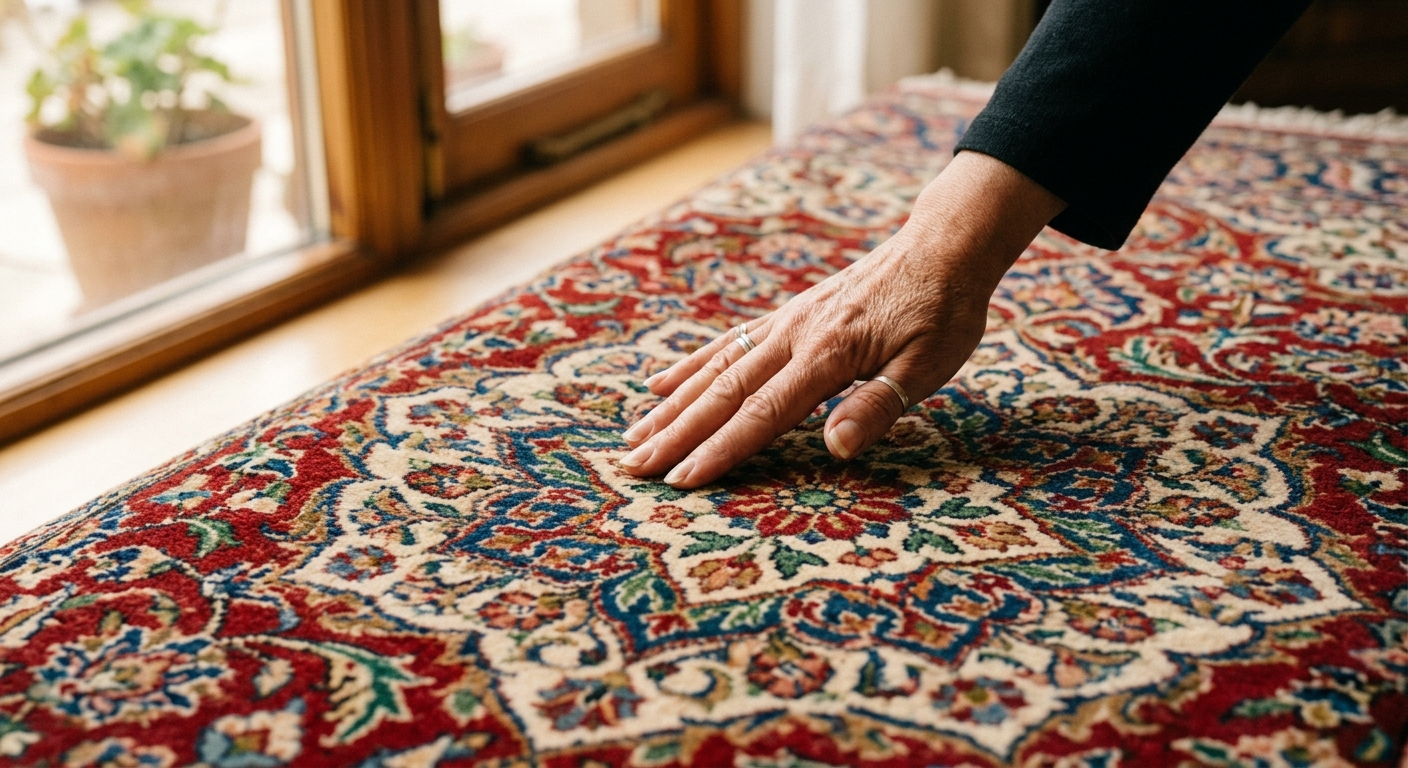
A fine Persian carpet is built to last generations. With proper care, a hand-knotted wool carpet can remain beautiful for 50, 100, or even 150 years. But "proper care" does not mean wrapping it in plastic and never walking on it. Persian carpets are meant to be used, enjoyed, and lived with. The key is understanding a few straightforward maintenance principles that protect your investment while letting you enjoy it every day.
Daily and Weekly Care
The single most important thing you can do for your carpet is regular vacuuming. Dust, dirt, and grit that accumulate in the pile act like tiny abrasives, gradually wearing down the fibers from below. Regular vacuuming prevents this buildup and keeps the carpet looking fresh.
**Vacuum at least once a week** for carpets in regular-use areas, and twice a week for high-traffic zones. Use a suction-only vacuum or a vacuum with adjustable beater bar height — set the beater bar high enough that it does not aggressively pull at the pile. Avoid vacuum cleaners with rotating brushes on delicate or antique carpets, as these can damage the fibers.
**Always vacuum in the direction of the pile**, not against it. You can determine the pile direction by running your hand across the surface — it will feel smooth in one direction and rough in the other. Vacuum in the smooth direction.
**Vacuum the back of the carpet** every few months. This removes grit that has settled through the pile to the foundation, where it can cause the most damage over time. Simply flip the carpet, vacuum the back, then flip it back and vacuum the front again to collect any loosened dirt.
Rotation
**Rotate your carpet 180 degrees every six to twelve months.** This ensures even wear across the entire surface and prevents one area from receiving disproportionate foot traffic. It also evens out any color changes caused by light exposure.
If your carpet is in a room with a consistent traffic path — say, between a door and a sofa — rotation is especially important. Without it, you will eventually see a visible wear pattern along that path.
Sunlight Protection
Prolonged direct sunlight is one of the most damaging forces your carpet can face. UV radiation fades colors, dries out natural fibers, and can cause brittleness over time. This applies to all carpets but is particularly important for silk and vegetable-dyed pieces.
**Use curtains, blinds, or UV-filtering window film** to reduce direct sun exposure. You do not need to keep the room dark — diffused natural light is fine. The goal is to prevent intense, direct sunbeams from hitting the same area of carpet for hours each day.
If your room has south-facing windows (in the northern hemisphere) that create strong sun patches, position the carpet to avoid those patches or use window treatments during peak sun hours.
Dealing with Spills
Spills happen. The key is to act quickly and correctly.
**Blot, never rub.** As soon as a spill occurs, blot the affected area with a clean, white cloth or paper towel. Press firmly to absorb the liquid, working from the outside of the spill inward to prevent spreading. Never rub or scrub — this pushes the liquid deeper into the fibers and can damage the pile.
**For water-based spills** (coffee, tea, juice, wine): blot as much as possible, then apply a small amount of cold water to dilute the remaining stain. Blot again. Repeat if necessary. For stubborn stains, mix one tablespoon of white vinegar with one teaspoon of mild dish soap in two cups of warm water. Apply sparingly with a cloth, blot, and rinse with clean water.
**For oil-based spills** (grease, butter, cosmetics): blot the excess, then sprinkle baking soda or cornstarch on the stain. Let it sit for 15 to 30 minutes to absorb the oil, then vacuum it up. If a mark remains, apply a small amount of dry-cleaning solvent to a cloth and gently dab the area.
**For pet accidents**: blot thoroughly, then clean with a solution of equal parts white vinegar and water. The vinegar neutralizes the ammonia in urine, which can otherwise set the stain and attract the pet back to the same spot.
**What to avoid.** Never use bleach, hydrogen peroxide, or harsh chemical cleaners on a Persian carpet. These can strip color, damage fibers, and weaken the foundation. Avoid steam cleaners, which can cause colors to run and shrink the foundation.
Professional Cleaning
Even with diligent home care, your carpet will benefit from professional cleaning every two to four years, depending on use. Professional carpet cleaners who specialize in handmade Oriental carpets use techniques that are fundamentally different from standard carpet cleaning services.
**Choose a specialist.** Not all carpet cleaners are qualified to handle handmade Persian carpets. Look for cleaners who specifically advertise experience with Oriental rugs and use hand-washing or gentle immersion methods. Avoid anyone who proposes to clean your handmade carpet with standard hot-water extraction (steam cleaning) equipment.
**Professional hand-washing** involves submerging the carpet in cool water with a gentle, pH-neutral cleaning solution, then rinsing thoroughly to remove all soap residue. The carpet is then carefully dried — either flat or on a gentle incline — to prevent color migration.
**Cost.** Professional cleaning typically ranges from 10 to 30 euros per square meter. For a 200x300 cm carpet, expect to pay between 60 and 180 euros. This is a worthwhile investment to protect a carpet that may be worth thousands.
Padding and Underlay
A quality carpet pad (underlay) is one of the best investments you can make. It serves multiple purposes:
**Prevents slipping.** A proper pad keeps the carpet securely in place, reducing the risk of trips and falls.
**Reduces wear.** The pad absorbs some of the impact of foot traffic, reducing stress on the carpet's foundation and extending its life.
**Improves comfort.** A pad adds cushioning, making the carpet feel softer and more luxurious underfoot.
**Protects floors.** The pad prevents the carpet's rough foundation from scratching hardwood or tile floors.
Choose a pad made from natural rubber or felt, cut slightly smaller than the carpet so it does not show at the edges. Avoid foam pads, which can deteriorate and stick to the carpet's back.
Storage
If you need to store a carpet — during a move, a renovation, or a seasonal change — proper storage technique is essential.
**Clean the carpet thoroughly** before storage. Any dirt, stains, or moisture left in a stored carpet can cause permanent damage, including mold and moth infestation.
**Roll, never fold.** Folding creates creases that can crack the foundation and permanently damage the pile. Roll the carpet around a sturdy cardboard tube, with the pile facing inward, rolling in the direction of the pile.
**Wrap in breathable material.** Use clean cotton sheets or acid-free paper. Never wrap a carpet in plastic, which traps moisture and creates conditions for mold and mildew. If you must use plastic for transport, remove it as soon as the carpet reaches its storage location.
**Store horizontally if possible**, on a raised surface to allow air circulation. Avoid storing carpets in damp basements, hot attics, or garages. A cool, dry, dark room is ideal.
**Add moth protection.** Cedar blocks or chips placed near (not directly on) the carpet deter moths naturally. Avoid mothballs, which can leave lingering odors and potentially stain the carpet.
Moth Prevention
Moths are the most common biological threat to wool carpets. Female moths lay eggs in dark, undisturbed areas of the carpet, and the larvae feed on wool fibers, creating visible bald patches.
**Regular use and vacuuming** are your best defenses. Moths prefer dark, undisturbed areas — a carpet that is walked on and vacuumed regularly is unlikely to attract them.
**Check under furniture.** The areas of carpet hidden under heavy furniture are most vulnerable because they are dark and rarely disturbed. Periodically move furniture to vacuum these areas and expose them to light and air.
**If you discover moth damage**, have the carpet professionally cleaned immediately. The cleaning process kills any remaining eggs and larvae. Then address the storage or environmental conditions that allowed the infestation.
Repairs and Restoration
Even well-maintained carpets may eventually need repair. Common issues include:
**Fringe damage.** The fringes (kilim ends) are the most vulnerable part of a carpet because they are extensions of the warp threads and are not protected by pile. Damaged fringes can be re-secured or replaced by a specialist.
**Edge binding.** The side edges (selvedge) can wear and unravel over time, especially on carpets placed in doorways or high-traffic paths. A carpet restorer can re-bind the edges to prevent further unraveling.
**Pile wear.** Areas of heavy traffic may eventually show worn or thin pile. A skilled restorer can re-knot worn areas, matching the original colors and patterns with remarkable precision.
**Color restoration.** Faded areas can sometimes be improved through careful washing and lanolin treatment, which restores some of the wool's natural luster and depth.
Address repairs promptly. Small problems — a loose edge, a few damaged fringes — are inexpensive to fix but can escalate into serious structural issues if ignored.
Long-Term Value
A Persian carpet that is well cared for is not just a beautiful possession — it is a store of value. Unlike furniture, electronics, or most consumer goods, quality handmade carpets can appreciate over time, particularly pieces from prestigious weaving centers like Tabriz, Kashan, Isfahan, and Ghom.
By following the care guidelines in this article, you are not just maintaining a carpet — you are preserving an asset and a piece of cultural heritage that can be enjoyed by future generations.
At Carpet Maison, we are always happy to advise our customers on the care and maintenance of their carpets. Whether you need a cleaning recommendation, repair advice, or storage tips, do not hesitate to reach out.